
In the world of urban architecture, the battle for square footage is constant. As we lean into the “Tiny House” movement and micro-apartment living, the challenge remains: how do you add living space without sacrificing the airy, open feel of a home?
Enter the “Invisible Floor.” Mezzanine nets (or indoor hammock floors) are rapidly shifting from high-end architectural curiosities to functional necessities for anyone looking to hack a small space.
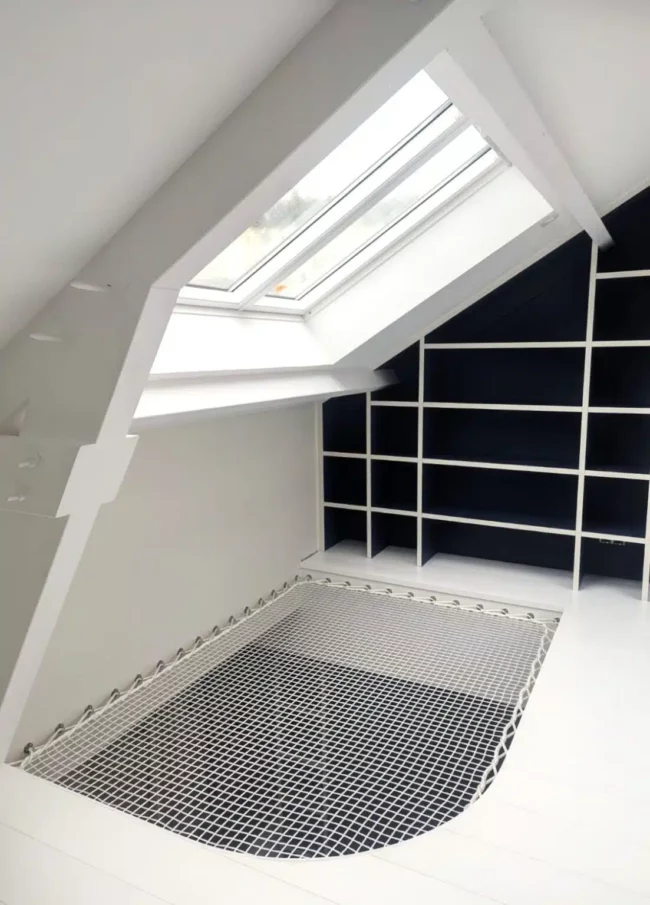
Breaking the “Box” Effect
When you’re working with a footprint of 400 square feet or less, every horizontal surface counts. Traditionally, adding a mezzanine meant building a solid wooden or steel platform. While functional, these structures often create a “boxed-in” feeling, cutting off airflow and—most importantly—killing the light.
A mezzanine net solves this by providing a high-tension, weight-bearing surface that remains transparent. It allows natural light to flow from skylights or upper-level windows down to the ground floor, keeping the entire unit feeling expansive rather than claustrophobic.
Key Benefits for Small Space Hacks:
Maximize Natural Light: Unlike solid lofts, nets don’t cast heavy shadows.
Air Circulation: In tiny homes, heat rises. Nets allow for better ventilation and temperature regulation than solid floors.
Visual Weightlessness: The “invisible” nature of the mesh keeps the sightlines open, making a room appear twice as large.
From Loft Bed Alternatives to Relaxation Zones
While many use mezzanine nets as loft bed alternatives, their utility extends far beyond just a place to sleep. They serve as a multi-functional “third space” that many small apartments lack.
Imagine a dedicated reading nook suspended over your living room, or a meditation zone that doesn’t require moving furniture. Because these nets are engineered to hold significant weight—often upwards of 175kg per square meter ()—they are as safe as they are stylish.
“A mezzanine net isn’t just about adding square footage; it’s about reclaiming the vertical volume of a room that usually goes to waste.”
Mezzanine Nets, a Design-Forward Solution for Urban Dwellers
For the design-conscious demographic, aesthetic is just as important as utility. Mezzanine floor ideas have evolved; you can now choose between different mesh sizes and colors (black, white, or grey) to match a “Scandi-industrial” or “Boho-chic” interior.
Installing a net is often more cost-effective and less invasive than traditional construction. It requires heavy-duty fixings into load-bearing walls or beams, but once tensioned, it creates a sleek, modern finish that turns a cramped loft into a high-design feature.
Is a Mezzanine Net Right for You?
If you are currently struggling with a cramped floor plan, consider looking up. If you have a ceiling height of at least 14 feet (4.2 meters), you have enough vertical clearance to install a net. It’s the ultimate way to maximize your footprint without losing the soul of your space.
Whether you’re looking for a cozy spot to lounge or a clever way to add a guest “room” in a studio, the mezzanine net is the most versatile tool in the modern dweller’s kit. It’s time to stop thinking about floors as solid objects and start seeing the potential in the air.