
Installing a net on your mezzanine is one of the smartest decisions you can make — for safety, for aesthetics, and for making the most of your vertical space. But with so many options available, the question quickly becomes: which net is actually right for my project?
This guide walks you through every variable that matters, so you can make a confident, informed choice.
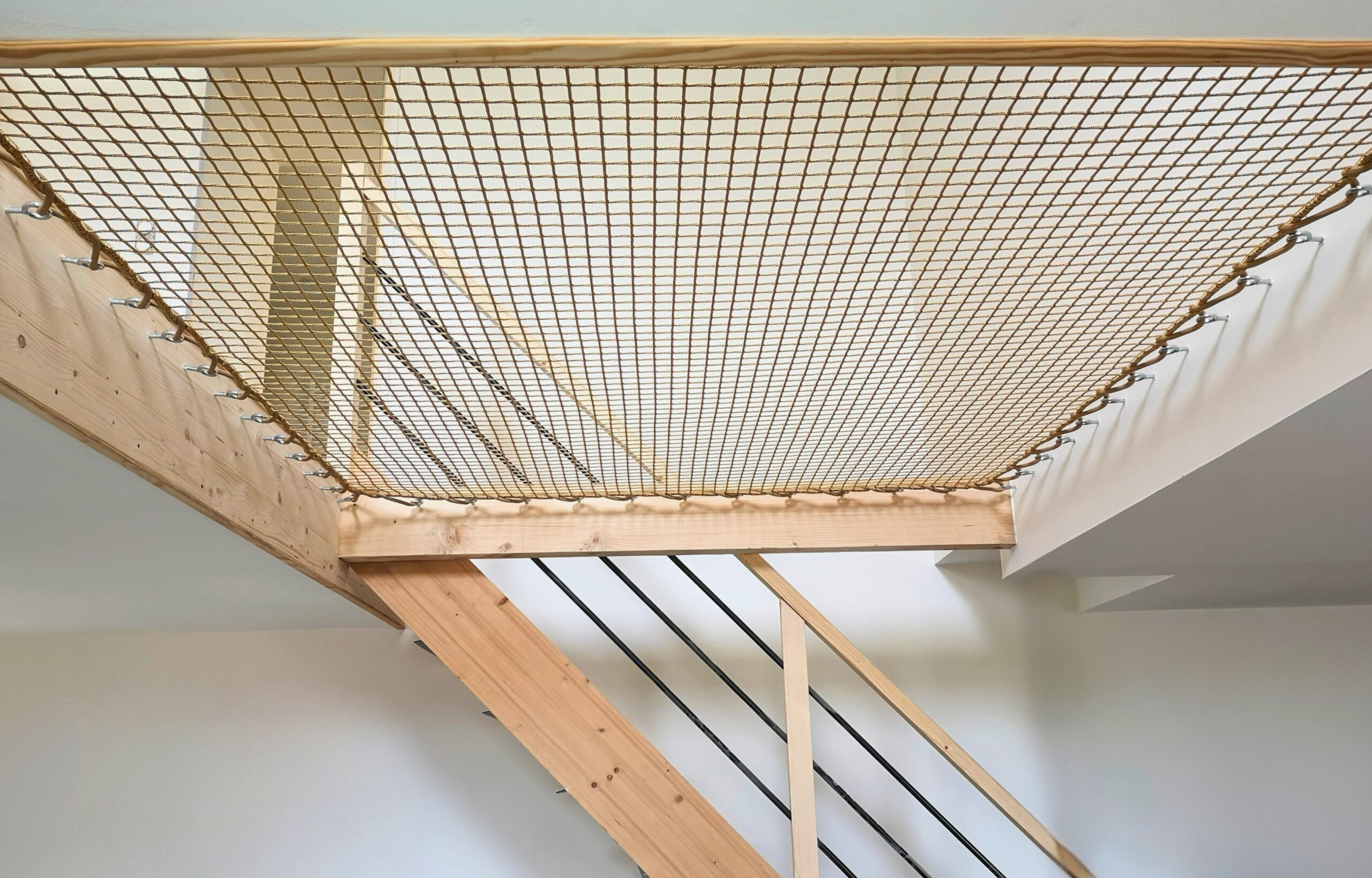
Why a Mezzanine Net Is More Than a Safety Feature
The obvious reason to install a mezzanine net is to prevent falls — especially in homes with children, pets, or open sleeping lofts. But today’s custom nets go far beyond basic protection. They define the visual character of a space, letting light flow freely while creating a sense of openness that a glass balustrade or wooden railing simply can’t match.
A well-chosen net turns a structural necessity into a design statement.
Choosing the Right Mesh Size
Mesh size is the first decision to make, and it depends on who uses the space and how.
30×30 mm mesh is the most popular choice for residential mezzanines. It offers excellent visibility from above, allows light to pass through, and is rated for standard domestic use. It’s ideal for adult-only lofts, reading nooks, and open-plan living rooms.
20×20 mm mesh provides tighter protection and is recommended wherever children or small pets are present. The smaller openings significantly reduce the risk of limbs or heads passing through.
45×45 mm or larger mesh suits decorative installations where safety requirements are lower — think atmospheric overhead netting, artistic room dividers, or large-scale lounge furniture.
When in doubt, go smaller. You can always choose a finer mesh for aesthetic reasons; you cannot retrofit safety.
Load Capacity: What Will the Net Actually Bear?
This is where many buyers underestimate their needs. A mezzanine net used purely as a guard rail has very different requirements than one designed as a suspended lounging platform — a trend that has exploded in contemporary interior architecture.
For passive safety (preventing falls), a net tensioned along the perimeter is sufficient. For active use — sitting, lying, children playing — the net must be specified for load-bearing, with reinforced borders, appropriate rope diameter, and certified fixation points anchored into the structure. Always ask your manufacturer for load-bearing specifications in writing.
Color and Material: Blending with Your Interior
Feelnets’ proprietary mesh is manufactured in France from high-tenacity polyester — resistant to wear, UV exposure, and deformation over time. It comes in a range of colors including white, ecru, beige, black, and anthracite.
White and ecru nets read as light and architectural, complementing Scandinavian and minimalist interiors. Beige suits warmer, natural material palettes — wood, linen, rattan. Black or anthracite creates contrast and works beautifully in industrial lofts or dark-toned spaces.
Fixation: The Detail That Makes or Breaks Installation
Even the best net will underperform with poor fixation. The three main frame types — wood, concrete, and steel IPN beams — each require specific fasteners. Feelnets supplies dedicated fixation hardware for each configuration, pre-matched to the net specification.
The border rope diameter also matters: a thicker rope distributes tension more evenly and extends the life of both the net and the anchor points.
The Smart Way to Order
Because every mezzanine has a different footprint, custom manufacturing is the only sensible route. Feelnets produces made-to-measure nets from your exact dimensions — including irregular shapes, angled walls, and non-standard openings — with delivery in 10 to 15 days and a personalized quote returned in under 3 hours.
Measure the full perimeter, note the frame material, identify the primary use, and you have everything needed to get started.