

Why winter is the real test for an outdoor net
A well-made outdoor net handles summer sun, rain and daily use without complaint. Winter is different. Months of standing water, freeze–thaw cycles, wet leaves and low light give dirt and algae time to settle into the mesh.
The good news: twenty minutes of care in autumn adds seasons to the life of your net. Whether it stretches over a patio, a deck, a pool terrace or a lakeside dock, the routine is the same. Clean it, dry it fully, store it properly and check the fixings before spring.
This guide walks you through each step, and helps you decide whether your net should come down at all.
Should you take your outdoor net down for winter?
In most climates with real winters, yes. Taking the net down is the simplest way to protect both the mesh and the structure it hangs from. It also lets you clean it properly.
Take it down if:
- Your area gets snow. Snow load on a horizontal net puts heavy, prolonged strain on the mesh, the edge rope and every anchor point.
- The net sits under trees and collects leaves, pine needles or sap.
- The structure is wooden and needs its own seasonal maintenance.
- The site is unused for several months, such as a holiday home or a seasonal cottage.
You can leave it up if:
- Your winters are mild and dry, with no snow and little frost.
- The net is used year-round, for example on a covered terrace or in a warm climate.
- You can inspect it regularly and brush off debris after storms.
If you are unsure, take it down. Removing and refitting a net with good mounting hardware takes far less time than replacing a damaged one.
How to clean an outdoor net before storing it
Never store a dirty net. Organic matter left in the mesh over winter feeds mould and leaves stains that are hard to shift by spring.
- Choose a dry, mild day. You need several hours of dry weather after washing, so check the forecast first.
- Brush off loose debris. Remove leaves, needles and dust with a soft broom while the net is still tensioned. This is far easier than picking debris out of a slack net.
- Wash with mild soapy water. Use lukewarm water and a gentle detergent or neutral soap. Work it into the mesh with a soft brush or sponge.
- Treat stains gently. For green algae or bird droppings, repeat the soapy wash and let it sit for a few minutes before brushing.
- Rinse thoroughly. A garden hose on a low setting is enough. Soap residue attracts dirt, so rinse until the water runs clear.
What to avoid:
- Pressure washers. A high-pressure jet can fray fibres and loosen knots or braiding.
- Bleach and harsh solvents. They weaken synthetic fibres and can fade colours.
- Stiff wire brushes. They abrade the surface of the cord.
For a deeper routine, including stain-specific tips, see our complete guide to cleaning and maintaining your home net.
Drying, folding and storing your net
Drying is the step people rush, and it is the one that matters most. A net packed away even slightly damp can develop mildew within weeks.
Dry it completely. Leave the net tensioned in place after rinsing, or drape it over a railing or clothesline. Let air circulate on both sides. Direct sun helps, but the net must be dry to the core of every cord, not just on the surface.
Detach it carefully. Release the tension evenly, side by side, rather than freeing one corner at a time. Keep the edge rope or lacing attached to the net if you can, so refitting in spring is quicker.
Fold, don’t crumple. Fold the net loosely in large panels, or roll it around a tube. Avoid sharp creases, tight knots and heavy objects pressing on it.
Store it somewhere dry and ventilated. A breathable cotton bag or a large storage box with air holes works well. Avoid sealed plastic bags, which trap moisture.
Good storage spots:
- A dry garage shelf, off the floor
- A loft or attic that does not get damp
- A utility room or cupboard inside the house
Keep the net away from rodents, sharp tools, fuel, solvents and heat sources such as boilers or radiators.
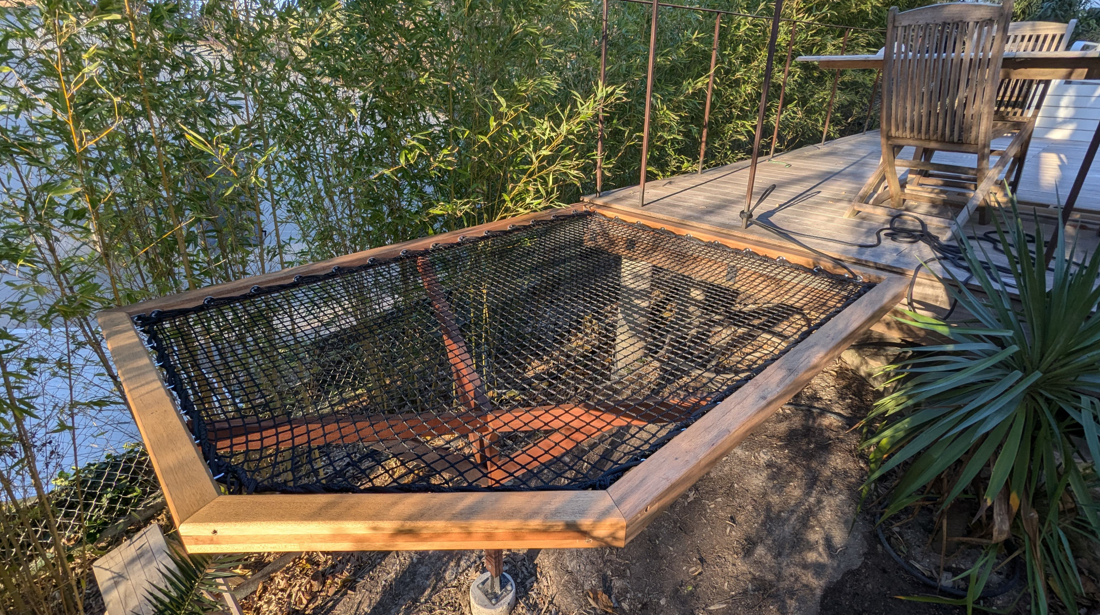
Don’t forget the hardware
The net is only as strong as what holds it. Once it is down, take a few minutes to inspect every fixing point.
- Anchors and eyebolts. Check they are still firmly seated. Look for cracks in wood or concrete around them.
- Turnbuckles and tensioners. Clean off grit, check the threads and apply a light coat of marine grease if they are metal.
- Steel cables. Look for broken strands, kinks or corrosion, especially near crimps and clamps.
- Lacing cord or edge rope. Replace any section that looks frayed, hardened or discoloured.
If the hardware is easy to remove, store it in a labelled bag with the net. If it stays on the structure, cover open threads to keep water out.
Not sure which fixings suit your setup? Our guide on choosing mounting hardware for a custom net explains the options.
If your net stays up all winter
Some nets are built to stay in place: a hotel terrace in a warm climate, a covered veranda, a dock net in a region with mild winters. In that case, a light routine keeps it in good shape.
- Release some tension. A slightly relaxed net copes better with temperature swings and any unexpected load.
- Clear it after every storm. Brush off leaves, branches and standing water before they settle.
- Never let snow build up. If snow falls, sweep it off gently with a soft broom. Do not walk or lie on a snow-covered net.
- Check it monthly. Look at the anchor points, the edge rope and any spot where the mesh rubs against the structure.
- Close it to use when frozen. Ice makes cords stiff and slippery, so keep people off until it thaws.
For waterfront nets, also watch for ice forming on the water below and spray reaching the mesh. Our article on dock and waterfront netting covers lakeside installations in more detail.
Spring reinstallation checklist
When the weather turns, run through this list before the first lazy afternoon on your net.
- Unpack the net and air it outdoors for a few hours
- Inspect the mesh, panel by panel, for cuts, fraying or loose knots
- Check the edge rope and lacing along the full perimeter
- Confirm every anchor point is solid and undamaged
- Refit and tension the net evenly, side by side
- Test it with gentle weight before full use
- Replace any worn hardware rather than waiting for midsummer
If you find damage you are unsure about, send a photo to the Feelnets team. Small repairs are often possible, and catching them early avoids bigger problems later.
Frequently asked questions
When should I take my outdoor net down? Before the first frost or the first snow forecast, whichever comes first. In most of Europe and Canada, that means October or early November.
Can I put my outdoor net in the washing machine? It is not recommended. The drum can tangle the mesh and damage the edge rope. Hand washing with mild soapy water is safer and just as effective.
How do I remove mould from a net? Wash it with lukewarm water and a mild detergent, brush gently, rinse well, then dry it fully in the sun. Avoid bleach, which weakens synthetic fibres.
Can a net be left out in the snow? It is best avoided. Snow adds heavy, uneven weight to the mesh and anchors. If the net must stay up, clear snow off promptly and keep people off it.
How long does an outdoor net last? A quality outdoor net can last many years with regular cleaning and proper winter storage. Lifespan depends on the material, the climate and how often it is used.
Should I store the net with its hardware attached? Keep the edge rope and lacing on the net if possible, as it speeds up refitting. Remove metal fixings, clean them and store them in a labelled bag.
Ready for next summer
A little care in autumn pays off in spring. Clean the net, dry it completely, store it somewhere dry and check the fixings, and it will be ready the moment the sun returns.
Planning a new outdoor project for next season? Winter is the ideal time to design it. Explore our custom outdoor nets for gardens, terraces and pools, or request a free quote. Every Feelnets net is made to measure in France and delivered worldwide.